Protecting Young Tomatoes and Cucumbers from a Late Freeze
A late freeze can undo weeks of work just after tomatoes and cucumbers have moved outdoors. These warm-season crops are especially vulnerable when young, and a cover helps only if it is set up before the cold settles in. Here’s how to judge the risk, protect plants overnight, and assess damage afterward without rushing into unnecessary repairs.
Why Young Tomatoes and Cucumbers Need Protection
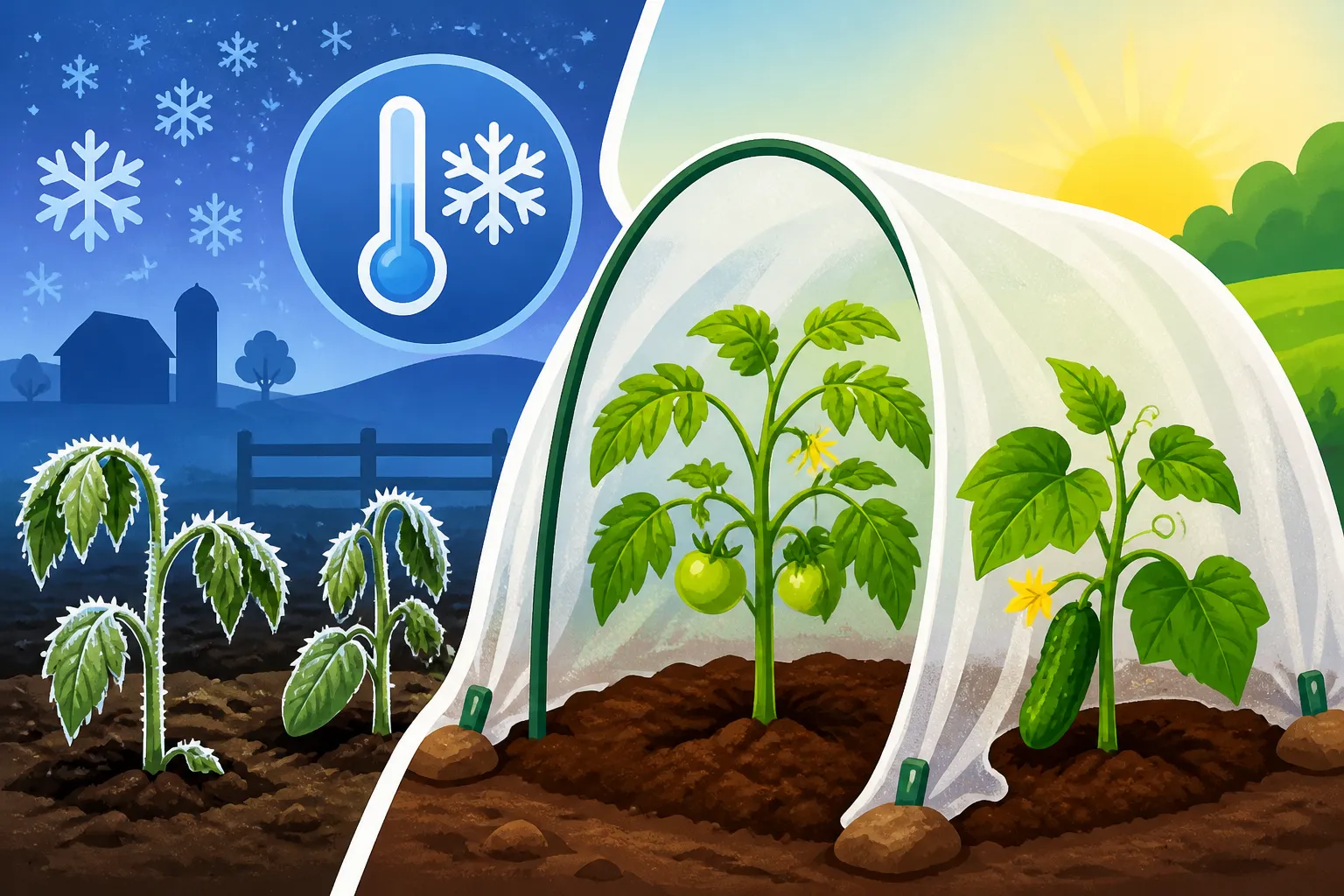
Tomatoes and cucumbers are warm-season plants. They grow best in warm conditions and can be injured by cold well before a frost forms. A freeze can damage leaves and stems, and severe cold may kill a young plant. Even a brief chill can slow growth or leave a transplant struggling to recover.
Young plants are often more exposed than established ones. They may have small root systems, limited reserves, and tender new growth. A transplant that has only recently moved from indoors or a sheltered nursery has also had less time to adjust to outdoor conditions. That is why checking the forecast after planting is just as important as choosing a planting date.
Frost and freeze are not the same risk
Frost forms when plant surfaces cool enough for moisture to freeze, while a freeze describes air temperatures reaching the freezing point or below. A weather forecast may warn of frost even when the reported air temperature stays above freezing, because temperatures can be colder near the ground and around plant leaves. A freeze can be more damaging, but a frost warning is still a reason to protect tender plants.
Conditions vary from one garden to another. Low spots and sheltered hollows can collect cold air, while slopes and areas near structures may experience different temperatures. Clear, calm nights can be especially risky because heat escapes quickly from the ground and plants. A forecast for a nearby town is useful, but it cannot capture every garden’s microclimate.
For more on how local conditions influence the timing of cold snaps, see Kentucky Garden Frost Protection: Cold Snaps, Covers, and Dates and How Kentucky Gardeners Read Spring and Autumn Freeze Chances.
A late freeze can injure plants even when it does not kill them
Cold injury may show up as wilted, water-soaked, darkened, or limp leaves. Leaf edges may turn brown, and stems may become soft or discolored. Damage is not always obvious first thing in the morning; symptoms may become clearer over the next day or two.
A plant that looks droopy after a cold night may not be dead. Wait for conditions to warm and watch for new growth before deciding whether to remove it. If the main stem is firm and new leaves emerge, the plant may recover. If the stem is badly damaged or the growing tip has collapsed, recovery is less certain.
A cover can reduce exposure, but it cannot guarantee survival. Protection works best when a plant is already reasonably healthy, the cover is secured, and the cold event is not too severe or prolonged. If a sharp drop is forecast, delaying planting or moving a plant back into shelter may be more reliable than trying to protect it in place.
Decide What to Do Before the Cold Arrives
Start with the forecast and your planting situation. Check the expected low, the timing of the coldest hours, and whether frost or a freeze is expected. Look at the forecast again later in the day, since conditions can change. If your garden is in a known cold pocket, take the warning seriously even if the local forecast seems marginal.
Then decide whether the plants can be moved. Tomatoes and cucumbers in pots are easy to bring into a garage, shed, porch, or other sheltered area for the night. Keep them away from indoor heat sources and return them outdoors once conditions have improved. A planted transplant cannot be moved, so it needs a temporary cover or, if possible, a delay in planting.
Use this order of operations:
- Check the forecast and garden conditions. Consider the forecast low, wind, cloud cover, and whether your garden sits in a low or exposed area.
- Choose a cover or moveable shelter. Use a suitable cover that can reach the ground around the plant, or move containers into shelter.
- Set the cover up before evening. Do not wait until leaves are already cold or frost is forming.
- Secure the cover. Keep it from blowing loose and close gaps around the base.
- Check the plants after the cold passes. Remove or open covers after temperatures rise, then look for damage over the following days.
If the forecast points to a cold night soon after transplanting, the simplest choice may be to wait before putting tender plants outdoors. Is It Safe to Plant Tomatoes and Peppers Outdoors Yet? covers the broader question of whether conditions are suitable for planting, while When to Move Vegetable Transplants Outdoors in Kentucky discusses transplant timing.
| Situation | Practical response | What to keep in mind |
|---|---|---|
| Tomato or cucumber in a pot | Move it into a sheltered space for the night | Bring it back outdoors after the cold risk has passed |
| Small plant in a garden bed | Cover it with a suitable fabric cover or an inverted bucket | Secure the edges and keep the cover from resting on leaves |
| Several plants in a row | Use a supported row cover | Anchor the sides and ends so cold air cannot easily enter |
| Severe or prolonged cold is forecast | Delay planting or move potted plants into shelter | A cover may not be enough for a vulnerable transplant |
| Cover cannot be secured properly | Use a different method or move the plant if possible | A loose cover can expose the plant and may damage it in wind |
How to Cover Plants for One Cold Night
The goal is to hold some of the warmth rising from the soil around the plant. A cover works best when it is put in place before the garden cools down, reaches close to the ground, and stays secure through the night.
Choose a cover that suits the plant
Lightweight fabric row cover is useful for protecting garden plants, especially when supported above foliage. A bucket, nursery pot, or similar container can protect one small plant. If you use a bucket or container, make sure it is large enough not to crush the leaves and can be secured against wind.
A blanket or drop cloth can also provide temporary protection if it is held up by stakes, cages, or another support. Heavy material resting on a plant can bend or break stems, particularly when it becomes wet. Protecting the plant from cold is the goal; the cover should not create a second problem by pressing on tender growth.
Plastic needs particular care. Clear plastic can warm quickly in sunlight and should not be left covering plants after temperatures rise. It also provides poor protection if it touches the leaves. A plastic sheet stretched over a frame may be used as an outer barrier, but fabric or another suitable material between the plastic and plant can help prevent direct contact. For the limits of plastic as a frost barrier, see Why Clear Plastic Makes a Poor Frost Shield for Kentucky Crops.
Cover early and secure the edges
Put covers in place before sunset, while the soil and plants still hold some warmth. A cover applied after the cold has already settled around the plant has less warmth to retain. Arrange it so it extends down toward the soil and covers the plant without pulling tightly against stems or leaves.
Anchor the edges with soil, stones, boards, or other secure weights that will not damage the plant. Close gaps at the ground, but do not tie the cover so tightly that it presses hard against foliage. If wind is expected, give extra attention to the corners and edges. A cover that blows away during the night cannot provide protection.
If you have several plants, a supported row cover may be easier to manage than covering each one separately. Use hoops or another support to keep the fabric above the foliage, and anchor both sides and ends. Using Fabric Row Covers Over Cold-Sensitive Spring Transplants offers more detail on this approach.
Remove or open covers after the risk passes
A cover that protects a plant at night can trap heat during the day. Remove it or open it once the cold risk has passed and temperatures are rising. If another cold night is forecast, put it back in place before evening.
For a single short cold spell, this daily routine can be simple. For a series of cold nights, you may need to cover plants repeatedly and check the forecast each day. Make sure the plants receive light and air during the day. Long periods under an opaque cover can stress them even when they are protected from cold overnight.
Avoid leaving a bucket or other solid cover over a plant in direct sun. It may heat up quickly, and a plant that has just endured cold stress should not be left in a hot, enclosed space.
For practical options with household materials, see Covering Tender Garden Plants on Cold Nights and Using Buckets and Drop Cloths for May Cold Snap Plant Protection.
After the Freeze: Check Damage and Give Plants Time
Once temperatures rise, uncover plants and check them gently. Look at the leaves, growing tips, and stems. Do not immediately pull out a plant because its leaves look wilted or dark. Cold injury can take time to become clear, and some plants recover if their main stems and growing points remain healthy.
Give the plant a few days of suitable growing conditions before making major decisions. Keep the soil evenly moist, but do not water simply because the leaves look wilted; cold damage and drought stress can look similar. Check the soil first. Avoid trying to force recovery with extra fertilizer or heavy pruning. Fertilizer cannot undo frost injury, and unnecessary pruning may remove tissue that could still recover.
When to remove damaged growth
Wait until you can distinguish dead tissue from living growth. If only a few leaves are damaged and the stem remains firm, leave the plant in place and watch for new leaves. Once new growth appears, you can remove clearly dead or broken material with clean tools.
If the main stem is soft, blackened, or collapsed, or if the growing point has been destroyed and no new growth appears, the plant may not recover. In that case, replacing it may be more practical than waiting. A transplant that has suffered serious damage may also remain weak and produce poorly, even if it survives.
Avoid common recovery mistakes
Several well-intended actions can add stress after a cold night:
- Do not prune immediately. Wait until the extent of injury is clearer.
- Do not overwater. Check the soil before watering, because cold-stressed roots may take up water slowly.
- Do not apply extra fertilizer to “wake up” the plant. It will not repair damaged tissue.
- Do not leave a daytime cover in place without checking the temperature underneath. Remove or open it as conditions warm.
- Do not assume one damaged leaf means the whole plant is lost. Check stems and new growth before replacing it.
If you are unsure whether the plant is recovering, compare its condition over several days. Look for firm stems, healthy new leaves, and signs that growth has resumed. A plant with limited leaf injury may still produce, although recovery can delay flowering or fruiting.
Reduce the Chance of Another Cold-Weather Setback
The most reliable protection is to avoid exposing tender plants to a cold night in the first place. Keep an eye on the forecast during the period when young tomatoes and cucumbers are outdoors, and be prepared to delay transplanting if a cold snap is approaching. A calendar is a planning aid, not a guarantee that frost risk has ended.
Harden off transplants gradually
Plants raised indoors or bought from a sheltered setting need time to adjust to outdoor light, wind, and temperature changes. Gradual hardening off helps reduce transplant shock, but it does not make tomatoes and cucumbers frost-tolerant. A hardened plant can still be injured by freezing conditions.
Follow a gradual routine that increases outdoor exposure while avoiding harsh conditions at first. Bring plants back into shelter when cold weather is expected. For a more detailed process, see Hardening Off Tender Kentucky Vegetable Transplants for Two Weeks.
Keep temporary protection ready
Before planting, set aside a few covers or containers that can be used quickly. Row-cover fabric, supports, and weights are much easier to arrange before a forecast cold snap than after dark. Check that the materials are large enough to cover the plants and that you have a way to secure them.
For tomatoes and cucumbers, a small garden can often be protected with individual covers. A larger planting may call for a supported row cover. Choose a method you can manage each evening and remove each morning during an unsettled spell. A cover that is difficult to secure or remove may not be a practical choice.
Use local conditions, not just a date
Kentucky gardens can differ in elevation, slope, shelter, and exposure. Cold air tends to settle in some low areas, while a garden close to a building may have a different temperature pattern. Track what happens in your own garden over time, especially if it repeatedly frosts sooner or later than nearby places.
Frost dates describe probabilities, not promises. Use them alongside the short-term forecast and your own observations. The Kentucky Spring Planting Guide: Frost Normals and Sowing Windows and Kentucky Frost Dates: When to Plant and When Freeze Hits explain how to use frost information without treating a date as a guarantee.
If a cold snap arrives after planting, protect plants as soon as you can and reassess afterward. For a broader response plan, see What to Do When a May Cold Snap Threatens Tender Crops. For methods that apply to a wider range of garden plants, Using Blankets and Improvised Covers Against Spring Frost provides additional options.
Frequently Asked Questions
Can a row cover keep tomatoes and cucumbers safe during a freeze?
A row cover can reduce cold exposure by holding warmth near the soil, but it is not a guarantee. Its effectiveness depends on the material, how well it is supported and secured, and how severe and long-lasting the cold is. Move potted plants into shelter or delay planting when a hard or prolonged freeze is forecast.
Should I cover plants before sunset or after it gets cold?
Cover them before sunset, while the soil and plants still retain warmth. A cover is less useful if you wait until the cold has already settled around the garden. Secure the edges so wind cannot lift it.
Can I leave a cover on the plants the next morning?
Remove or open the cover after the cold risk passes and temperatures begin to rise. A cover can trap heat in sunlight, particularly if it is made of plastic or is an enclosed container. If another cold night is expected, cover the plants again before evening.
Should I replace a tomato or cucumber after its leaves turn dark?
Not necessarily. Check the stems and growing point, then give the plant time to show whether new growth appears. Replace it if the main stem is badly damaged or no recovery is evident after conditions improve. A few damaged leaves alone do not prove the entire plant is lost.
Disclaimer
This article is for general informational purposes only and does not constitute professional advice. Laws, prices and regulations vary by location and change over time. Consult a qualified professional for guidance on your specific situation. Kentucky Gardening Guide is not a government agency and is not affiliated with any university extension, state department of agriculture or other government agency.