Covering Tender Garden Plants on Cold Nights
A forecast for a cold night can put tender tomatoes, peppers, cucumbers, and flowers at risk, especially when they have only recently gone outdoors. The right cover can reduce frost damage, but only if it is supported, secured, and removed at the right time. Here’s how Kentucky gardeners can choose a cover and use it without trapping cold or harming plants.
Which garden plants need cover on cold nights
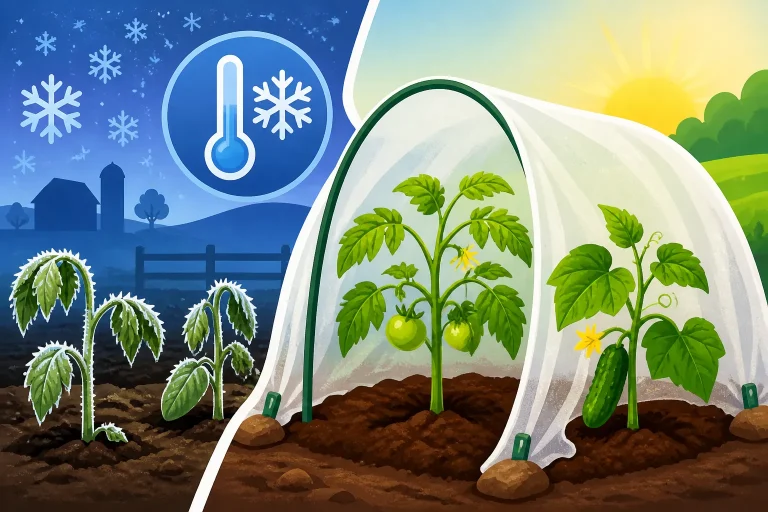
Tender crops and recently planted transplants are the first to consider when temperatures are expected to fall. Tomatoes, peppers, cucumbers, squash, beans, and basil can be injured by cold conditions; frost can damage them even when the forecast does not call for a hard freeze. Young plants are especially vulnerable because they may not yet be established, and a sudden temperature drop can follow a warm spell.
Cold-tolerant crops, such as spinach, lettuce, and peas, generally handle cooler conditions better than warm-season vegetables. That does not make them immune to frost damage. Their tolerance depends on the crop, its stage of growth, how cold it gets, and how long the cold lasts. A cover may still help protect tender leaves or newly planted seedlings.
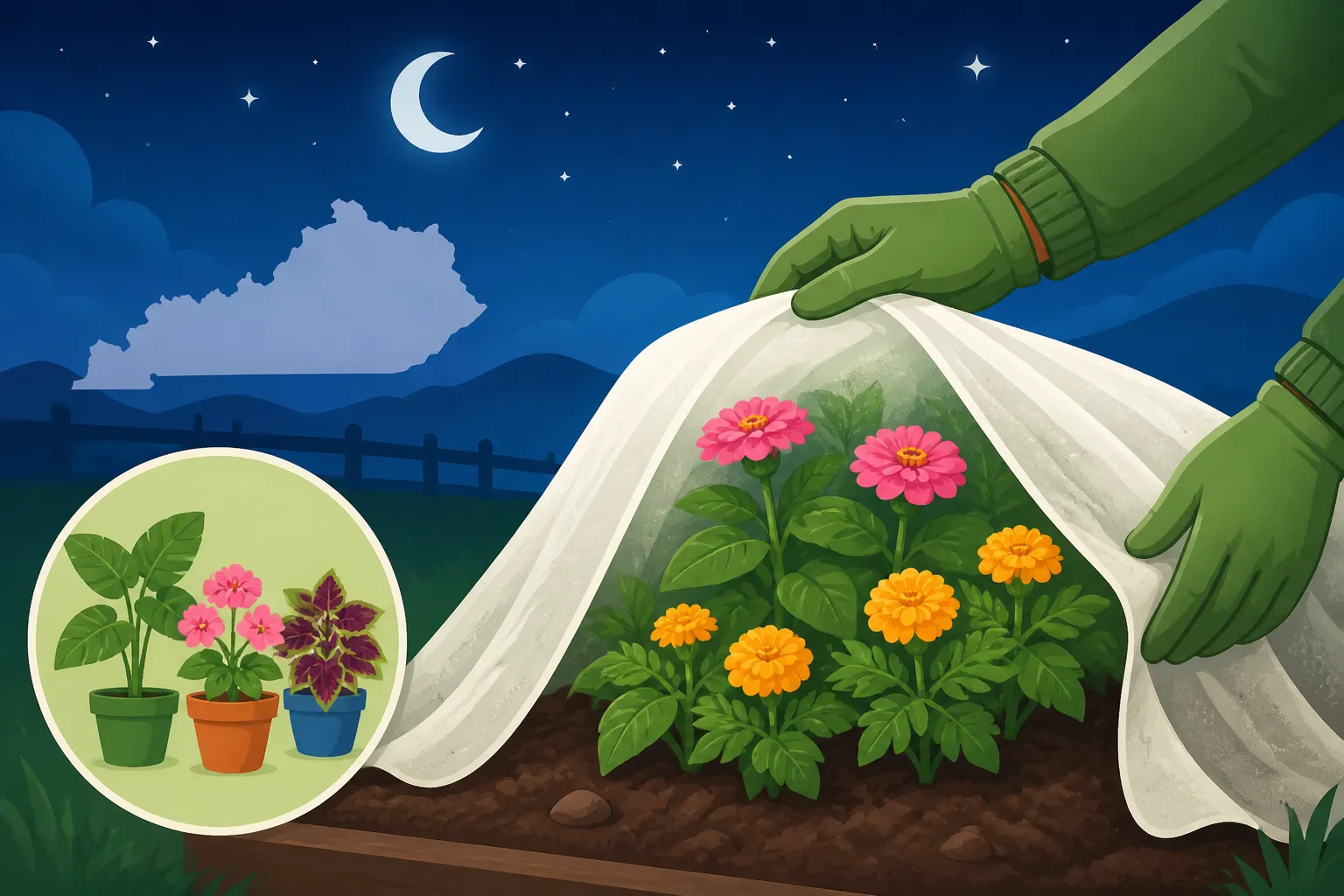
Flowers, herbs, and container plants can also need attention. Tender annuals and heat-loving herbs may suffer in conditions that hardy perennials tolerate. Plants in pots are more exposed to cold than plants in the ground because their roots have less soil around them. Move containers to a sheltered spot if practical, or cover them along with garden plants.
Before deciding what to cover, check the forecast for your specific location. Kentucky’s terrain creates local differences: a low-lying garden or hollow can cool more quickly than a nearby slope, while a sheltered site may stay warmer. A forecast is a useful warning, not a precise reading for every bed. For broader timing context, see Kentucky Frost Dates: When to Plant and When Freeze Hits and How Kentucky Gardeners Read Spring and Autumn Freeze Chances.
A plant’s planting date also matters. Transplants recently moved outdoors may be less prepared for cold than established plants that have acclimated to changing conditions. If a cold night is forecast soon after transplanting, covering is one part of the response; choosing a suitable planting window and hardening plants off beforehand also reduces stress. See Hardening Off Tender Kentucky Vegetable Transplants for Two Weeks and When to Move Vegetable Transplants Outdoors in Kentucky.
Choosing a cover that protects without damaging plants
The best cover is one that can be placed over the plant before cold settles in, held securely through the night, and removed or opened when conditions warm. Fabric covers, old sheets, lightweight blankets, and purpose-made garden row covers are common options. A bucket or other rigid cover can protect an individual small plant if it is large enough not to crush the foliage.
The cover should reach the ground or close to it where possible. The soil releases some stored warmth after sunset, and a cover that traps that warmth around the plant can reduce exposure to cold air. A cover that sits only over the upper leaves, with large gaps below, offers less protection. Secure the edges so wind cannot lift or displace the material.
| Cover | Useful for | Main caution |
|---|---|---|
| Fabric row cover | A bed or row of crops; can be supported above plants | Secure the edges and avoid crushing foliage |
| Sheet or lightweight blanket | Temporary protection for a few plants | Wet, heavy fabric can weigh down plants |
| Bucket or similar rigid cover | A small individual plant | Remove it promptly after the cold period; check that it does not press on leaves |
| Clear plastic | A supported cover when carefully managed | Can trap heat in sunlight and should not rest against foliage |
Fabric is often easier to manage than plastic for a short cold night. It lets some air and moisture pass through, and it is less likely to heat up quickly in daytime sun. Purpose-made row covers are available in different weights; heavier material can offer more insulation but may also limit light and airflow more than a light cover. Follow the product instructions for the specific material.
A sheet or blanket can work as a temporary cover, but avoid using anything so heavy that it flattens stems or holds water against the leaves. If the material is damp or heavy, use a frame or stakes to keep its weight off the plant. Garden hoops, sturdy stakes, or a simple support structure can hold a cover above foliage. Check that the supports are stable and will not fall onto the plants in wind.
Plastic needs more care. It can trap heat during the day, and direct contact between plastic and leaves can leave the plant exposed where the material touches. If plastic is the only practical choice, support it so it does not rest on foliage, secure it, and vent or remove it when the sun warms the covered area. Clear plastic is not always an effective frost shield; see Why Clear Plastic Makes a Poor Frost Shield for Kentucky Crops for more on its limitations.
For a single small plant, a bucket or other rigid container may be simpler than building a frame. Set it over the plant before temperatures drop, and make sure it is stable. Avoid containers with gaps that expose the plant to wind, and do not leave an opaque cover on through a sunny day. The point is overnight protection, not a permanent enclosure.
How to cover plants before and during a cold night
A cover works best when it is ready before the garden has already become cold. Gather materials ahead of the forecasted weather, identify which plants need attention, and make sure you can cover them without breaking stems or trampling nearby crops. Waiting until late evening can make setup harder, especially if wind has picked up.
Use this process when a cold night is expected:
- Check the local forecast. Look for the expected low and whether frost or a freeze is possible. Forecasts are not exact at every garden site, so consider your own location, especially if it sits in a low spot.
- Prioritize the most vulnerable plants. Focus first on tender crops, new transplants, and plants with exposed foliage. If you cannot cover everything, protect the plants most likely to be damaged or most important to you.
- Water dry soil earlier in the day if the bed needs it. Moist soil can hold and release heat differently from very dry soil, but avoid soaking foliage just before nightfall. Do not water if the soil is already wet or poorly drained.
- Set up supports where needed. Place hoops, stakes, or other supports so the fabric or blanket stays above the leaves. Make sure the structure is stable and does not have sharp edges that can tear the material.
- Drape the cover over the plants and bring the edges down. Aim to enclose the bed or plant close to the soil surface. Secure the edges with clips, weights, boards, or soil where appropriate, taking care not to damage stems.
- Check the cover after installation. Confirm that wind cannot lift it and that no heavy folds are pressing on plants. If the material is likely to collect water, adjust the support so it can shed it.
- Remove or vent the cover after the cold period. Once temperatures rise and the risk has passed, open or remove the covering so plants receive light and air. Do not leave plants sealed under an opaque or plastic cover in warming daytime conditions.
The exact time to put a cover on depends on the forecast, local conditions, and the material. The practical aim is to have it in place before the coldest part of the night, rather than waiting to see frost on the leaves. If a cold snap is forecast to last for more than one night, check the cover and plants each day. A cover may need to be repositioned, dried, or opened between cold periods.
Do not rely on a cover to make a tender plant safe in every freeze. Its protection varies with the material, fit, wind, duration of cold, and how close the plant is to the ground. A cover can reduce exposure, but it is not a guarantee. If the forecast suggests a severe or prolonged freeze, moving potted plants indoors or into a sheltered space may be a better option. For more temporary-cover choices, see Using Blankets and Improvised Covers Against Spring Frost and Using Fabric Row Covers Over Cold-Sensitive Spring Transplants.
Common mistakes and how to avoid them
Letting the cover touch the foliage
A cover that rests directly on leaves can transfer cold to the plant where it touches, and a wet or heavy material can press down on stems. Support the cover above the foliage when possible. Small plants under a rigid cover may be fine if there is enough room inside, but avoid crushing leaves while setting it in place.
Leaving gaps at the edges
A cover that is loose or lifted by wind can let cold air reach the plants. Secure the edges close to the ground, especially on the side exposed to wind. A good fit does not mean stretching fabric tightly over the leaves; it means preventing drafts while keeping enough space for the plant.
Forgetting to remove or open it the next day
A cover that protects plants overnight can create problems if it stays in place as temperatures rise. Opaque materials block light, while plastic can warm the air underneath quickly in sunshine. Check covered beds in the morning and remove or vent the material when conditions permit. If another cold night is expected, you can put it back later.
Using a cover that is too small or unstable
A small cover may not reach the ground or may expose outer leaves. A light structure can tip over in wind, and a bucket may roll or shift. Size the cover to the whole plant or row, and secure it with materials that will not damage the garden. If you use a frame, make sure it can support the cover without collapsing onto the crop.
Assuming a warm daytime forecast means a safe night
A sunny afternoon does not rule out a cold night. Spring weather can shift quickly, and a garden’s exact temperature may differ from a forecast location. Pay attention to overnight lows, frost potential, and your garden’s tendency to cool. Use the forecast as a prompt to prepare rather than as a promise that every plant will be safe.
Planting tender crops before they are ready for local conditions
Covering is a useful short-term measure, not a substitute for timing. Warm-season crops planted too early may face repeated cold nights, slow growth, and additional stress even if they escape frost. Use local planting guidance and account for the conditions at your own site. Kentucky Spring Planting Guide: Frost Normals and Sowing Windows and Kentucky Spring Planting: When to Move Warm-Season Crops Out can help with the broader planting decision.
If plants are damaged despite your precautions, wait until the cold has passed and assess the damage before removing affected growth. Some leaves may be injured while stems or growing points remain alive. Avoid making a hurried decision based on one damaged leaf; check the plant over the next few days for new growth or continued decline.
Planning covers around Kentucky’s changing spring conditions
Kentucky gardeners often need to balance planting progress with the chance of a late cold night. Frost dates can help frame that risk, but they are probabilities rather than fixed dates. Conditions vary from year to year, and garden sites differ within the same community. A sheltered yard may behave differently from a low, open bed, so keep notes about where cold tends to settle and which plants need the most help.
Plan in layers rather than treating every crop the same way. Cold-tolerant vegetables can often go into the garden earlier than tender warm-season crops, while tomatoes, peppers, cucumbers, squash, and basil are more vulnerable to cold. If you are unsure which plants to start outside and which to keep protected, Start Indoors or Direct Sow: Kentucky Garden Planting Methods provides a useful comparison.
Have covers ready before the first forecast that worries you. A few clean sheets, a suitable row-cover fabric, garden hoops, and secure weights are easier to use when stored together. Measure beds and identify how each cover will be supported. For container plants, decide in advance where pots can be moved if the weather turns sharply colder.
Make a simple priority list for nights when time or materials are limited. Newly transplanted warm-season crops, small seedlings, and prized tender plants may come first. Larger, established, cold-tolerant plants may need less help, depending on the forecast and site. A practical plan also includes checking the cover the following morning, so the same protection does not become a daytime hazard.
Finally, keep the purpose of covering in perspective. It is a flexible way to reduce cold exposure for a limited period, not a way to force the season. If cold weather continues, consider delaying additional planting, protecting pots in a sheltered area, or replacing plants only after conditions stabilize. A careful cover can save tender growth, but choosing the right planting window remains the more dependable foundation.
Frequently Asked Questions
Should I cover garden plants before frost or after it appears?
Cover plants before the coldest part of the night, ideally before frost forms. Covers are most useful as preventive protection; adding one after leaves are already frozen does not reverse damage.
Can I leave a garden cover on during the day?
Usually, remove or open an opaque cover after the cold period so plants receive light and air. Check plastic especially carefully because temperatures underneath can rise in sunshine.
Is a sheet enough to protect a tomato plant?
A sheet can offer temporary protection if it covers the plant and is secured close to the ground. Its effectiveness depends on the cold, wind, duration, and how well it fits, so it cannot guarantee that a tomato will avoid damage.
Do potted plants need more protection than plants in the ground?
Often, yes. Roots in containers have less surrounding soil to buffer cold. If practical, move tender pots to a sheltered location or cover them securely for the cold period.
Disclaimer
This article is for general informational purposes only and does not constitute professional advice. Laws, prices and regulations vary by location and change over time. Consult a qualified professional for guidance on your specific situation. Kentucky Gardening Guide is not a government agency and is not affiliated with any university extension, state department of agriculture or other government agency.