Kentucky Fall Vegetable Planting Calendar
A fall garden in Kentucky can produce greens, roots, and brassicas long after summer crops slow down, but the planting window is easy to misjudge. Seeds need to sprout in hot, dry soil, and crops must mature before cold weather limits growth. This calendar explains what to sow by season, how to time crops backward from frost, and how to keep seedlings growing through summer heat.
How to use a Kentucky fall vegetable planting calendar
Fall planting is not simply spring planting moved to a different month. In spring, warming soil and longer days help crops grow. In late summer, seeds face heat, dry soil, and shortening days. A successful fall garden accounts for all three, along with the likely arrival of frost in your own part of Kentucky.
Use the calendar as a set of flexible windows rather than a statewide deadline. Kentucky’s growing conditions vary with elevation, terrain, and local weather. A garden in a low-lying hollow may cool earlier than a nearby exposed ridge; a sheltered urban yard may stay warm longer than an open site. Even within one county, sunlight, drainage, and exposure can shift the pace of a garden.
The most useful planning tool is the expected first fall frost for your area. Frost dates are probabilities, not fixed dates, and they vary from year to year. Check an appropriate local weather station’s frost information, note the probability attached to its date, and treat that date as a planning reference rather than a guarantee. The Kentucky Frost Dates: When to Plant and When Freeze Hits page explains how to interpret frost timing.
Then work backward from the harvest you want. A seed packet’s days-to-maturity figure is a starting point, not a promise. It may count from sowing or transplanting, and actual growth changes with weather, soil moisture, and day length. For a fall crop, allow extra time when days are shortening or when the crop is started during very hot weather. If you want a dependable harvest before frost, aim for maturity well ahead of the likely first frost instead of relying on the final possible day.
A practical sequence is:
- Identify the likely frost window for your garden area.
- Choose crops that fit the remaining growing time and your preferred harvest.
- Check the seed packet to see whether maturity is counted from sowing or transplanting.
- Add time for heat-stressed establishment, shorter days, and local conditions.
- Sow in successions where practical, rather than putting all the seed in one planting.
- Prepare to protect crops that can keep producing after the first light frost.
For a broader look at year-round timing, use the Kentucky Year-Round Garden Calendar and Planting Schedule. This fall calendar focuses on how to plan for autumn harvests and cold weather.
Month-by-month fall planting calendar
The dates below describe general planting periods, not fixed statewide cutoffs. Use them alongside your local frost estimate, packet maturity information, and the crop’s tolerance for cold. The early part of fall planting generally happens during summer heat, so the earliest sowings need the most attention to moisture and germination.
July: Start crops that need the longest runway
July is an important month for fall vegetables, even though it can feel too hot to plant cool-season crops. Some crops need a long stretch to establish and mature before cold weather slows them. Starting early gives them more time to develop while the soil is still warm enough to support growth.
Consider sowing or starting:
- Fall brassicas, such as broccoli, cabbage, and Brussels sprouts. These are commonly started in a protected seedbed or indoors during summer, then transplanted once seedlings are sturdy and the garden bed is ready.
- Carrots and beets, which benefit from a long growing period. Early sowing helps roots develop before cold weather slows them.
- Bush beans, if you have enough time for a crop to mature before frost. They are less cold-tolerant than many fall vegetables, so use the packet’s maturity information carefully.
- Summer squash and cucumbers, for a possible late-season crop where the remaining warm period is long enough. These are vulnerable to frost and should not be counted on for harvest after a freeze.
- Early successions of greens, when you can keep the seedbed consistently moist and cool enough for germination.
July sowing can be challenging because the soil surface dries quickly. The seedbed may need light, frequent attention to stay moist through germination; once seedlings are established, water more deeply as needed to support root growth. Shade over the seedbed can reduce harsh afternoon exposure, but it should not block so much light that seedlings become weak. The Sowing Fall Greens and Root Crops in July and August article offers more detail on summer sowing.
For brassicas, starting seeds in a protected location can be more dependable than asking tiny seeds to germinate in hot, exposed ground. The Starting Fall Cole Crops in July for Late Harvests article covers that approach.
August: Keep sowing and transplanting in succession
August is a busy month for fall crops. It is a good time to continue sowing greens and roots, and to set out sturdy transplants when conditions allow. Don’t assume that cooler-season crops will thrive automatically just because they are labeled “cool-season.” In August, seedlings still have to get through hot afternoons and uneven moisture.
Depending on your local conditions and the time remaining before frost, consider:
- Lettuce, spinach, and other leafy greens in successive small sowings rather than one large planting.
- Radishes, turnips, and beets for relatively quick root crops, checking packet maturity and choosing a sowing window that leaves room for growth.
- Carrots where the soil can be kept moist during germination and early establishment.
- Broccoli and cabbage transplants that have developed strong roots and several healthy leaves.
- Bush beans or summer squash only if their remaining time to harvest fits your local frost outlook.
When transplanting, avoid placing a stressed seedling directly into hot, dry ground and leaving it there without follow-up care. Water the planting area before or during transplanting, firm soil gently around the roots, and check the plants while they establish. If seedlings are very small, weak, or root-bound, they may take longer to recover and begin growing. For practical timing, see Planning Fall Garden Successions Before First Autumn Freeze.
September: Favor fast crops and protect what is growing
As September approaches, the calendar becomes less forgiving for crops that need a long warm season. Prioritize quick-maturing crops and plants already established in the garden. Continue sowing greens and quick roots while the local frost outlook and packet timing allow, but make sure you leave enough time for usable growth.
A September planting can still yield useful leaves or roots, especially if the weather stays mild, but the crop may not reach the size or maturity you would get from an earlier sowing. Lettuce and spinach can be harvested young. Radishes may be ready sooner than slower root crops, although flavor and texture depend on growing conditions. Brassicas started earlier are more likely to produce a full head or larger harvest than newly started plants.
At this point, pay attention to the difference between crops that need a complete harvest and those that can be picked gradually. A mature head of cabbage depends on the plant reaching an appropriate size. Leaf lettuce can provide smaller pickings as it grows, and some greens can be harvested leaf by leaf. Planning for the kind of harvest you want can make a late sowing worthwhile even if it does not produce a full-sized crop.
October and later: Harvest, protect, and assess new sowings
By October, most garden planning is about harvesting, maintaining existing crops, and extending the season rather than starting slow-growing vegetables. The right timing depends on your local conditions, the crop’s cold tolerance, and whether you can use covers or another form of protection.
Keep harvesting crops that are ready; leaving mature vegetables in the bed does not always improve their quality. Check greens and roots frequently, and remove damaged or diseased foliage so it does not interfere with the remaining plants. A light frost may improve the flavor of some cold-tolerant crops, but that does not mean every crop is safe from every freeze.
Late sowings of quick greens may be possible where temperatures and daylight still support establishment, but don’t expect a small seedling to grow rapidly as days shorten. For more detail on late sowing, see How Late into Autumn Can You Sow Greens in Kentucky?. The Kentucky Fall Harvest Calendar: Greens, Roots, and Late Brassicas article can help match harvest expectations to the crops already in your garden.
What to plant and how to time each crop
The best fall crops combine a suitable maturity period with the kind of harvest you want. Some vegetables are sown directly where they will grow; others are easier to start in a nursery bed or indoors and transplant. Heat tolerance and cold tolerance are separate considerations: a crop may handle frost later in the season but struggle to germinate in midsummer heat.
| Crop | Common fall approach | Main timing concern | Harvest and cold note |
|---|---|---|---|
| Lettuce | Direct-sow in small successions or transplant | Keep seedbed cool and moist in hot weather | Harvest young leaves or heads before severe cold |
| Spinach | Direct-sow in succession | Hot soil can interfere with germination | Establish early enough for useful leaf growth |
| Radishes | Direct-sow | Choose a quick-maturing type and avoid dry soil | Usually a short-season option; harvest before roots become oversized or pithy |
| Carrots | Direct-sow in prepared soil | Even moisture is important during germination | Needs time for roots to develop; sow earlier than quick greens |
| Beets | Direct-sow | Allow enough time for roots to size up | Leaves may also be harvested while roots develop |
| Turnips | Direct-sow | Match packet maturity to the local frost outlook | Roots and greens can both be useful |
| Broccoli | Start in summer and transplant | Establish transplants while there is time for head development | Earlier plants are more likely to produce a full head |
| Cabbage | Start in summer and transplant | Allow time for firm heads to develop | Established plants can be more dependable than late seedings |
| Brussels sprouts | Start in summer and transplant | Needs a long establishment period | Plant early; late sowings may not develop the expected crop |
| Bush beans | Direct-sow | Must mature before frost | Frost-sensitive; late plantings carry more risk |
| Cucumbers | Direct-sow or transplant | Need warm conditions but are frost-sensitive | Choose only when enough warm growing time remains |
| Summer squash | Direct-sow or transplant | Heat, pests, and frost timing affect the crop | A late planting may produce before frost, but cannot tolerate a freeze |
Days-to-maturity figures vary by cultivar and by how the seed company counts the starting point. Read the packet closely. If it counts from transplanting, include the time needed to raise the transplant. If it counts from sowing, remember that a plant started in difficult conditions may take longer than the listed figure.
Leafy greens
Lettuce and spinach suit fall gardens because they can provide useful leaves without requiring a large mature fruit or head. Their seeds can be difficult to establish in hot, dry soil, so choose a shaded or cooler part of the bed for germination if possible. Keep the upper soil layer evenly moist without leaving the bed waterlogged. Once seedlings emerge, thin them as needed so plants have room to grow.
Sowing a little at a time makes it easier to manage harvests and reduces the chance of having more leaves ready than you can use. Early sowings can be harvested gradually, while later sowings may serve as small-leaf crops. Cold tolerance differs among varieties and conditions, so use covers when a cold spell threatens rather than assuming all greens will tolerate an extended freeze.
Root crops
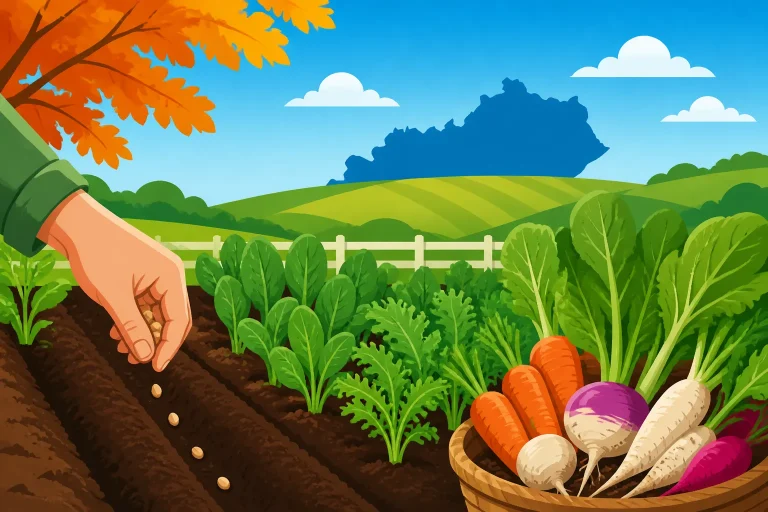
Carrots, beets, radishes, and turnips are useful fall choices, but they do not all fit the same planting window. Quick radishes may produce a harvest sooner than carrots, which need a longer period for roots to develop. For root crops, prepare a fine, reasonably even seedbed so small seeds have reliable contact with moist soil. Avoid letting the seed row dry out before emergence.
Root crops can be especially frustrating when germination is patchy. A surface that crusts or dries repeatedly may leave gaps, even if the bed looks damp when checked casually. Water gently enough not to wash seeds out of place. For crop-specific planning, see When to Plant Fall Root Crops Before Hard Autumn Freezes.
Brassicas
Broccoli, cabbage, and Brussels sprouts are usually more manageable as transplants for a fall garden. Starting them during summer gives small plants a chance to develop before they face autumn’s shorter days. Transplants should be sturdy and healthy, not so young that they are easily damaged or so old that they struggle to establish.
A brassica transplant needs enough time after planting to root into the bed and form the part you intend to harvest. Broccoli heads and cabbage heads do not appear instantly after transplanting, and Brussels sprouts need a particularly long period of growth to develop well. If your planting window is short, prioritize crops already started rather than assuming late seed will catch up.
Warm-season crops
Beans, cucumbers, and summer squash can sometimes be planted for a fall harvest, but they are a higher-risk choice than cold-tolerant greens and roots. They need warm conditions for active growth, yet a frost ends their season. A late sowing may produce well in a long, warm autumn, but a cool spell or early freeze can cut it short.
Before planting, compare the crop’s listed maturity time with the warm growing period likely to remain. If the calculation is close, consider using the bed for a faster crop instead. A fall garden does not have to include every summer vegetable to be productive.
Sowing, transplanting, and caring for crops in summer heat
The hardest part of a fall garden often comes before autumn: getting seeds and transplants established during summer. Soil at the surface can heat and dry quickly, while seedlings have shallow roots and little capacity to recover from missed watering. Careful bed preparation and early attention can make the difference between a row of seedlings and an empty seed line.
Prepare the bed before sowing
Remove finished spring crops and weeds, then loosen only the area needed for the new planting. If the soil is compacted or crowded with roots, seedlings may have trouble establishing. Add finished compost if the bed needs organic matter, but avoid burying seed in large clumps or creating a fluffy surface that dries rapidly.
Sow into moist soil, not soil that is already dusty or crusted. Water the bed before planting if needed, then sow at the depth on the packet. Small seeds usually need a shallow, even cover; overly deep sowing can delay emergence or prevent seedlings from reaching the surface. Keep the seed row labeled so it is not mistaken for a gap and replanted too soon.
Manage moisture without washing out seed
A freshly sown bed needs steady moisture until the seeds germinate. That may mean checking it more often during hot weather, especially if wind or direct sun dries the surface. Water gently so seeds stay in place. Once seedlings are established, encourage deeper rooting by watering the bed thoroughly when needed rather than relying only on quick surface sprinkles.
The right watering pattern depends on soil texture, drainage, weather, and the crop’s stage. Sandy or raised beds may dry faster than heavier soil, while poorly draining soil can stay saturated and deprive roots of oxygen. Check the soil itself rather than following a rigid schedule. The Watering Kentucky Vegetable Plots During Midsummer Heatwaves article covers moisture management in hot weather, and How Much Water Kentucky Gardens Need Weekly From Rain and Hose explains how to think about rainfall and supplemental watering.
Reduce heat stress during establishment
A temporary shade cloth or light covering can help reduce direct heat on a seedbed. The goal is to lower stress without blocking too much light or trapping excessive heat. Keep any cover supported above the plants and remove or adjust it as seedlings become established. A thick layer of mulch can conserve moisture around growing plants, but it can also obstruct tiny seedlings if placed directly over a newly sown row. Keep the seed line visible and make sure emerging plants can reach the light.
If the bed has been in use through summer, check for pests before sowing again. Remove old crop debris where it may shelter insects or disease, and avoid placing a vulnerable new crop into a bed where the same pest problem is already active. Crop rotation can reduce some risks, though it cannot prevent every disease or insect issue.
Give transplants time to recover
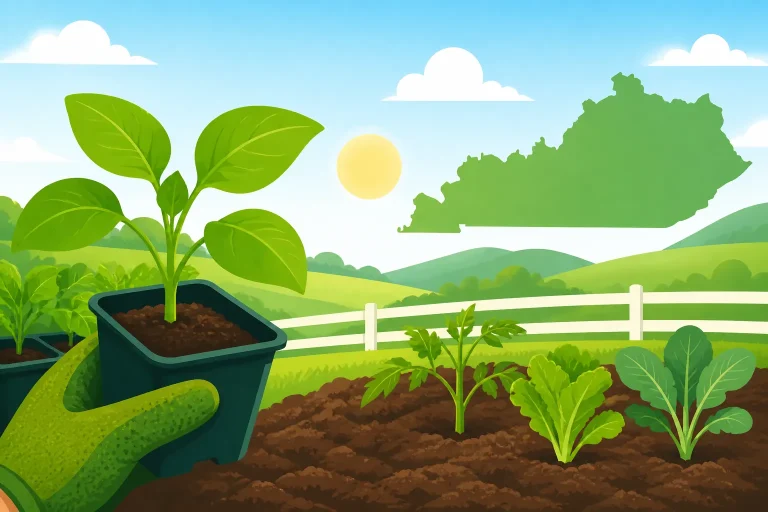
Transplant in cooler conditions when practical, such as later in the day, and water the plants thoroughly as they settle in. Handle the root ball gently; avoid pulling a seedling out by its stem. Firm the soil enough to remove large air gaps but do not pack it hard. Shade may help newly set transplants through the hottest part of the day while roots establish.
Watch for signs of stress. A transplant that wilts during the hottest hours but recovers later may be adjusting, while a plant that remains limp or develops dry, scorched leaves needs attention. Check the soil around the root ball: the surrounding bed can be damp while the root plug itself has dried out. Consistent moisture during establishment is more useful than a single heavy watering followed by neglect.
For more on staggered planting, see Vegetable Crop Succession and Harvest Planning in Kentucky. Fall successions can be small: a short row or a few containers planted at intervals may provide a more practical harvest than a large planting that matures all at once.
Plan successions and harvests around frost
A fall garden works best when the planting plan reflects the type of harvest you actually want. One large sowing may mature all at once, while a succession plan spreads the work and makes better use of uncertain weather. Successions also offer a way to hedge against poor germination during hot, dry periods.
Stagger quick crops
For crops that mature relatively quickly, sow a small amount, then repeat after an interval that makes sense for the crop and the remaining season. The interval does not need to be exact. The goal is to avoid having every plant reach harvest size at the same time.
A simple succession plan could include:
- Sow the first row or small bed while enough time remains for the crop to mature.
- Check germination and early growth before deciding whether to add more.
- Sow another small section while the weather and frost outlook still allow it.
- Harvest young leaves or roots from earlier plantings while later ones continue growing.
Do not continue sowing automatically as the season advances. Each later planting has less time and fewer daylight hours for growth. Use the packet maturity information and your local frost estimate to decide whether a new sowing is worthwhile. The Staggering Kentucky Garden Sowings to Avoid Midsummer Harvest Gaps article focuses on succession planning; the same basic idea applies to autumn, with greater attention to the shrinking growing window.
Use frost tolerance, but don’t overestimate it
A crop’s ability to withstand a light frost does not mean it can tolerate any cold weather. Plant size, how long temperatures remain low, wind, soil moisture, and the type of freeze all affect damage. Young seedlings may be more vulnerable than established plants. Tender crops such as beans, cucumbers, and summer squash should be treated as frost-sensitive.
Cold-tolerant crops often continue to provide harvests through cool weather, especially when established before the cold arrives. However, growth slows as temperatures fall and days shorten. A plant that survives frost may not add much new growth afterward. That is why it helps to have useful size before the coldest weather rather than relying on a plant to mature late.
Harvest before quality declines
Check crops regularly as they approach maturity. Radishes can become pithy or overly sharp if left too long, and leafy greens can become coarse or damaged as conditions change. Harvesting outer leaves selectively can extend the usefulness of some greens, while root crops are best lifted when they have reached the size and texture you prefer.
For crops that can remain in the ground, soil and weather still matter. Wet, poorly drained soil can damage roots, and a prolonged freeze can make harvesting difficult. Don’t leave every crop in the bed simply because it tolerates some cold. The Kentucky Fall Harvest Calendar: Greens, Roots, and Late Brassicas can help set realistic harvest expectations.
Protect fall vegetables when cold weather arrives
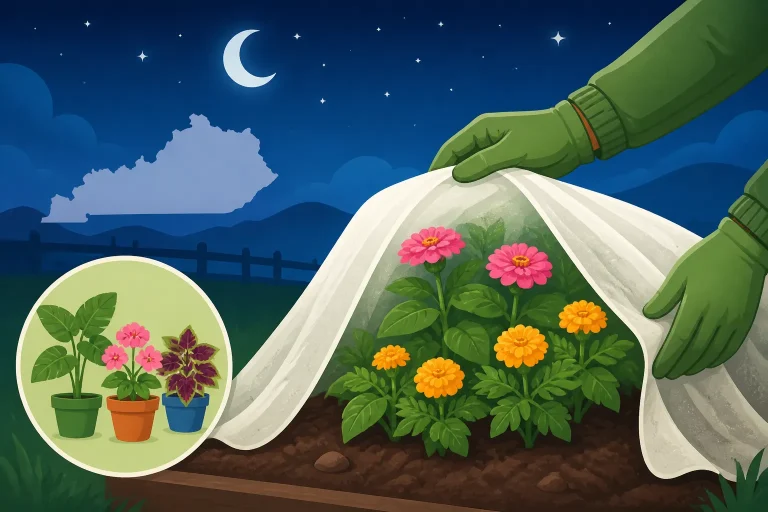
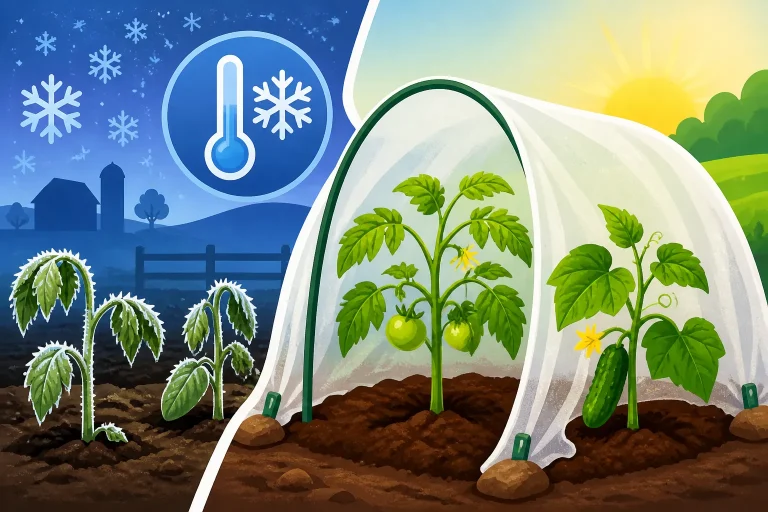
Protection can extend the harvest, but it cannot turn a fall garden into a frost-proof one. Covers are most useful when they are installed before a cold night, supported so they do not crush plants, and secured so wind cannot displace them. The crop’s cold tolerance and the severity and duration of the forecast cold still matter.
A fabric row cover can buffer plants from a light frost while allowing light and water through, depending on the material. A low tunnel can provide a similar protective space over a bed. Covers need to reach close to the ground so warmth is not lost as quickly, and they should be checked for damage or gaps. Avoid letting plastic rest against leaves where cold can be transferred to plant tissue; use a frame to keep it off the plants when appropriate.
Covers also affect temperature and moisture on mild days. If the sun warms the covered area, plants can overheat, so monitor conditions and adjust the cover as needed. Keep an eye on moisture under cover as well: rain may not reach the soil, and a covered bed can dry out even when the surrounding garden looks wet.
Choose protection based on the crop and the forecast rather than covering everything automatically. Tender crops need more help than established cold-tolerant greens, and a severe or prolonged freeze may overwhelm simple covers. For practical approaches, see Protecting Late Fall Vegetables from Sudden October Frosts and Covering Tender Garden Plants on Cold Nights.
A few habits make cold-weather protection more dependable:
- Know which crops are still in the bed and how sensitive they are.
- Check the forecast for the minimum temperature and how long cold conditions may last.
- Put covers in place before temperatures drop, rather than waiting until plants are visibly damaged.
- Secure the edges and keep covers from pressing heavily on foliage.
- Remove or ventilate covers when conditions warm enough to create excess heat.
- Harvest mature tender crops before a damaging freeze if protection is uncertain.
Common fall planting mistakes and how to avoid them
Planting too late because the weather still feels warm
A warm afternoon can make it seem as if the garden has plenty of time left. But crops need time to germinate, establish, and grow, and the season’s shortening days affect their pace. Use the expected frost window and packet information together. If a crop’s maturity estimate uses most of the remaining time, choose something faster or harvest it young.
Treating “days to maturity” as an exact countdown
Packet figures are useful for comparison, not exact scheduling. They may be based on ideal conditions and may count from sowing or transplanting. A crop slowed by hot, dry establishment may take longer; a late crop may also grow more slowly as daylight decreases. Add a reasonable buffer, especially for crops where you want a full head or large root.
Sowing cool-season seed into dry, hot soil
Cool-season crops still need suitable conditions to germinate. Seed scattered into a dry bed may sit without sprouting, while repeated heavy watering can wash it into a clump or leave the surface crusted. Prepare the bed, water gently, and keep the seed zone evenly moist through emergence.
Starting too many crops at once
A large planting can create a harvest glut and makes summer watering more demanding. A smaller bed with successive sowings is often easier to manage. Prioritize crops that your household will use and that fit the time left in the season.
Assuming every crop can stay out after frost
Some crops tolerate light frost; others are damaged quickly. Even cold-tolerant plants can stop growing or suffer in a hard freeze. Know the difference between surviving a brief cold night and producing a dependable harvest through winter. Use covers as a buffer, not a guarantee.
Ignoring the garden’s microclimate
A low spot that holds cold air, a windy exposed bed, and a sheltered area beside a building may have different growing conditions. Observe where frost appears first and where soil stays wet or dries quickly. If you have had trouble with earlier planting dates, Kentucky Garden Frost Protection: Cold Snaps, Covers, and Dates and How Kentucky Gardeners Read Spring and Autumn Freeze Chances offer useful context for interpreting local risks.
Frequently Asked Questions
When should I start a fall vegetable garden in Kentucky?
Start planning in summer. Crops that need a long time to develop, including brassicas and slower root crops, generally need an earlier start than quick greens and radishes. Use your local frost outlook and the seed packet’s maturity information to choose a sowing or transplanting window.
What vegetables can I plant in late summer for a fall harvest?
Common options include lettuce, spinach, radishes, carrots, beets, turnips, broccoli, and cabbage. The best choice depends on how much time remains, whether you will direct-sow or transplant, and whether you can keep seeds and seedlings moist through summer heat.
Can I plant vegetables after the first fall frost?
Some crops tolerate light frost and may continue to be harvested, but growth slows as temperatures and daylight decrease. A late planting may produce small leaves or roots rather than a full-sized crop. Check the crop’s cold tolerance and the forecast before deciding to sow or leave plants in the garden.
Do fall vegetables need covers?
Not always. Covers can help protect vulnerable crops during a light frost or brief cold snap, but their effectiveness depends on the material, setup, crop, and weather. Tender crops are more at risk than established cold-tolerant greens. Check conditions under covers so plants do not overheat on mild, sunny days.
Disclaimer
This article is for general informational purposes only and does not constitute professional advice. Laws, prices and regulations vary by location and change over time. Consult a qualified professional for guidance on your specific situation. Kentucky Gardening Guide is not a government agency and is not affiliated with any university extension, state department of agriculture or other government agency.