Kentucky Indoor Seed Starting Schedule
Starting seeds indoors can give Kentucky gardeners more control over germination and transplant readiness, but a calendar alone cannot tell you when seedlings are ready. The right schedule depends on the crop, indoor conditions, and the weather where you garden. Use this guide to plan what to start, what to sow outside, and how to adjust as the season unfolds.
Build the schedule around the garden, not a fixed date
An indoor seed-starting schedule is most useful when it works backward from the conditions a plant needs outdoors. A seed packet may suggest when to sow, but outdoor readiness still depends on local weather, soil condition, and the maturity of the seedling. A calendar can help you organize the work; it should not force you to move a tender plant outside simply because a particular day has arrived.
Kentucky gardens do not all warm at the same pace. A sunny, sheltered yard can feel ready before an exposed site, while low spots may stay colder or wetter. Conditions can also vary from one season to the next. Rather than treating a statewide date as a guarantee, watch your garden, consult local weather forecasts, and compare your plans with the regional guidance in Kentucky Spring Planting Guide: Frost Normals and Sowing Windows.
Start by deciding which crops you want to grow and how you intend to plant them. Some plants benefit from a head start indoors, while others are simple to sow directly in the bed. You can also choose to buy transplants for crops that are difficult to manage indoors or that you only want in small quantities. A mixed approach often makes the schedule easier to manage than starting every crop from seed inside.
For each crop you plan to start, check the seed packet for its sowing directions and any variety-specific notes. A packet may provide details about germination, sowing depth, and transplanting. Those instructions are more useful than a generic schedule when they address the variety you actually have. Botanical Interests is one seed source whose packets can be used as a reference when organizing crop-specific directions; follow the instructions for the variety you choose.
A practical schedule has a few checkpoints:
- Planning: Choose crops, check seed packets, gather supplies, and decide which crops are worth starting indoors.
- Sowing: Start seeds when the crop’s needs and your growing setup align, rather than sowing everything at once.
- Seedling care: Give seedlings suitable light, moisture, and growing space so they develop steadily.
- Outdoor preparation: Prepare beds and harden off transplants before planting them outside.
- Adjustment: Delay or change plans if seedlings are not ready, the bed is not workable, or the weather remains unsuitable.
This approach keeps the schedule flexible. If seedlings grow more slowly than expected, you can give them more time indoors. If they grow quickly, you can adjust their care and plan for a suitable outdoor window rather than transplanting them into risky conditions. For a broader comparison of starting methods, see Start Indoors or Direct Sow: Kentucky Garden Planting Methods.
Decide which crops to start indoors
Starting indoors is useful when it solves a particular problem: the crop needs more time to develop, the outdoor planting window is inconvenient, or you want greater control over establishment. It is not automatically the best choice for every vegetable. Some seeds do well when sown directly where they will grow, while others can struggle if their roots are disturbed during transplanting.
| Crop or crop group | A sensible starting approach | What to consider |
|---|---|---|
| Tomatoes and other tender crops | Often started indoors for later transplanting | Seedling health, outdoor temperatures, and time to harden off |
| Cool-season leafy crops | Can be started indoors or sown outdoors, depending on the crop and plan | Whether you want a transplant or a direct-sown row |
| Root crops | Usually consider direct sowing | Root disturbance and the ease of sowing in the final bed |
| Crops with delicate or easily disturbed roots | Prefer direct sowing when practical | Whether the plant tolerates transplanting |
| Crops wanted in a small number | Start indoors or purchase transplants | Space, equipment, and how much seed you want to handle |
| Crops with a long indoor holding period | Start only if you can provide suitable light and growing space | Crowding, weak growth, and the need to pot up |
This table is a planning aid, not a rule for every variety. Seed packets may recommend a different method, and growing conditions can change what is practical. A crop that is easy to start indoors in a well-lit setup may be frustrating in a dim room. Conversely, a gardener with a sheltered outdoor bed may be able to sow a crop directly when another gardener prefers transplants.
Think about the work involved as well as the crop. Indoor seed starting requires regular attention to moisture, light, and airflow. Seedlings do not thrive simply because they are under a roof. They need suitable growing conditions, and they can become weak or crowded if they remain in a small container after outgrowing it. If you have limited space, focus on crops that benefit most from a head start instead of filling every tray.
Direct sowing can reduce handling and transplant stress. It also means the seed is exposed to outdoor conditions, so soil readiness and weather matter. If a bed is soggy, compacted, or difficult to work, sowing there may be a poor choice even when the calendar seems favorable. Preparing the bed before sowing can make either approach more successful; Preparing Vegetable Garden Beds for Spring Planting covers that task in more detail.
The choice is also about harvest planning. Starting everything indoors at once can produce more seedlings than you have room to plant. Before sowing, consider how many plants you can fit in the garden, how much produce you want, and whether you can use or share the surplus. A smaller, deliberate sowing can be easier to care for than a large batch that outgrows its containers before the garden is ready.
Schedule cool-season crops by germination and garden readiness
Cool-season vegetables are often part of an early garden plan, but “cool-season” does not mean that every seed should be started indoors. Some are well suited to direct sowing, and others may be grown as transplants when that fits the gardener’s goals. The choice depends on the crop, the seed packet, and whether the bed is ready to use.
According to University of Kentucky Cooperative Extension Service, cool-season crops such as spinach, radishes, and lettuce germinate best at 55°F to 65°F. That temperature range is a useful reference for understanding why a warm room may not be ideal for every seed. If a seed-starting area runs warmer than a crop prefers, consider a cooler spot or direct sowing when the outdoor bed is ready.
For leafy crops, decide whether you want a concentrated planting or a succession of smaller sowings. A single planting can provide a flush of harvest, while staggered sowings can spread the harvest period. The best choice depends on how much you eat, the space available, and how consistently you can tend the garden. For ideas on sequencing outdoor sowings, see Staggering Kentucky Garden Sowings to Avoid Midsummer Harvest Gaps.
Indoor starts can be helpful when you want seedlings ready to plant as soon as a suitable outdoor window opens. But a transplant that is too small, too crowded, or poorly acclimated may not provide an advantage over a direct-sown crop. Judge the plant itself, not merely the date on your schedule. A sturdy seedling with healthy growth is a better candidate for planting than one that has become stretched or stressed while waiting indoors.
Cool-season plans should also account for the bed. A garden can be cold yet workable, or relatively mild but too wet to prepare without damaging its structure. Avoid treating a particular stretch of weather as a signal to dig if the soil is wet and clods easily. You can use indoor sowing to keep the plan moving while waiting for a bed to become workable, but do not start seedlings so early that they must be held indoors for an extended period without adequate space and light.
For crops such as spinach and radishes, direct sowing is often a straightforward option because the plants can grow in their intended location. If you do start a crop indoors, check whether its roots tolerate transplanting and handle the seedlings gently. Move them into the bed only when the soil and weather suit the crop, and water them carefully as they establish.
Lettuce offers flexibility: you can use direct sowing, transplants, or a combination. Starting a small number indoors may help you establish an early planting, while sowing additional seed outside can keep the bed productive later. Protecting seedlings from harsh conditions is still important, and transplanting does not remove the need to monitor temperature, moisture, or changing weather.
A cool-season schedule should therefore leave room for three decisions: whether to start indoors, whether to sow directly, and whether current outdoor conditions are suitable. For practical guidance on sowing cold-tolerant crops outside, see Sowing Cold-Hardy Peas, Lettuce, and Spinach in Early Spring. For broader planning across the year, Kentucky Year-Round Garden Calendar and Planting Schedule can help connect early sowing with later garden tasks.
Schedule warm-season crops with extra attention to outdoor conditions
Warm-season crops need a different plan from cool-season crops. Tomatoes, peppers, cucumbers, squash, and other tender vegetables are vulnerable to cold conditions, so a head start indoors can be useful. But starting seed early is only helpful when you can keep seedlings healthy until the garden is ready. A small, sturdy transplant is generally a better starting point than a large, stressed plant that has spent too long in a container.
According to University of Kentucky Cooperative Extension Service, warm-season crops such as tomatoes germinate best at 65°F to 75°F. If your indoor space stays cooler or warmer than a crop’s preferred germination conditions, adjust where you place the containers or review the seed packet’s instructions. Germination conditions are only one part of the process; seedlings also need appropriate light and moisture after they emerge.
Plan warm-season sowing by working backward from your intended outdoor planting window, while keeping the packet’s directions in view. Do not rely on a guessed number of weeks. Different crops and varieties develop at different rates, and indoor conditions can change how quickly seedlings grow. The useful question is not simply “Have I started yet?” but “Can I keep these plants growing well until the garden is ready?”
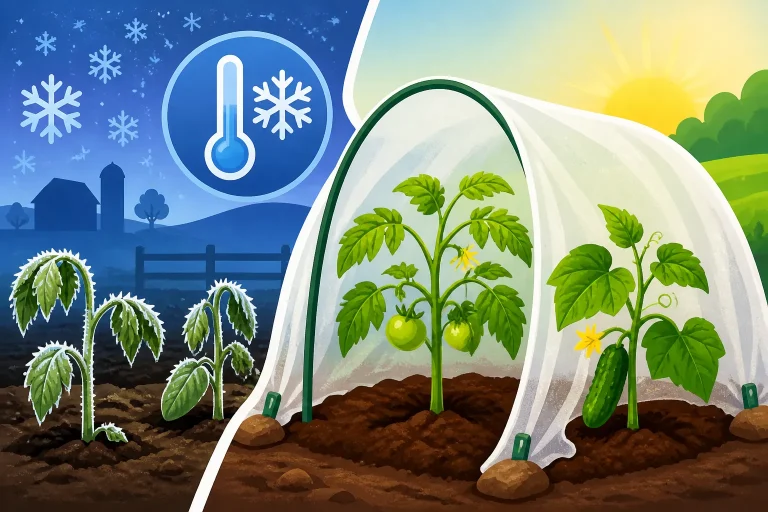
Tomatoes are a common indoor-start crop, but the transplant still needs a suitable outdoor setting. Before planting, make sure the bed is prepared, the seedlings have been hardened off, and the local forecast does not point to a cold snap. A calendar date cannot protect a plant from an abrupt change in weather. If a cold night threatens after planting, use a suitable protective method and check Protecting Young Tomatoes and Cucumbers from a Late Freeze.
Peppers and eggplants also benefit from a careful transition. Avoid setting them outside simply because daytime conditions feel warm. Nights, wind, and sudden temperature changes can be hard on tender transplants. If the forecast is unsettled, holding plants in a suitable sheltered place may be safer than putting them in a bed and hoping conditions improve.
Cucumbers and squash are often direct-sown, though gardeners may start them indoors when they want more control or are working with a short outdoor window. These crops can be sensitive to root disturbance, so handle them gently if transplanting and avoid keeping them in containers longer than necessary. The seed packet can help you decide whether the variety is suited to indoor sowing or direct planting.
Warm-season crops also need room. Before starting seed, estimate how many plants your garden can support and where they will go. Seedlings that are packed tightly together may compete for light and become awkward to manage. If you have more plants than space, thinning or giving away extras may be necessary. It is often easier to start a manageable quantity than to rescue a crowded tray later.
Use a flexible warm-season sequence rather than a single sowing day. Start the crops that benefit most from indoor preparation, then make later decisions based on the condition of the seedlings and the garden. Some gardeners also purchase transplants for crops they do not want to start themselves. That can be a sensible trade-off if indoor space, light, or time is limited.
For crop-specific details, consult Kentucky Transplant Dates for Warm-Season Garden Tomatoes and When to Move Vegetable Transplants Outdoors in Kentucky. Those topics can help you refine the move outdoors, but the final decision still depends on your garden’s conditions and the plants’ readiness.
Set up an indoor growing area that supports steady growth
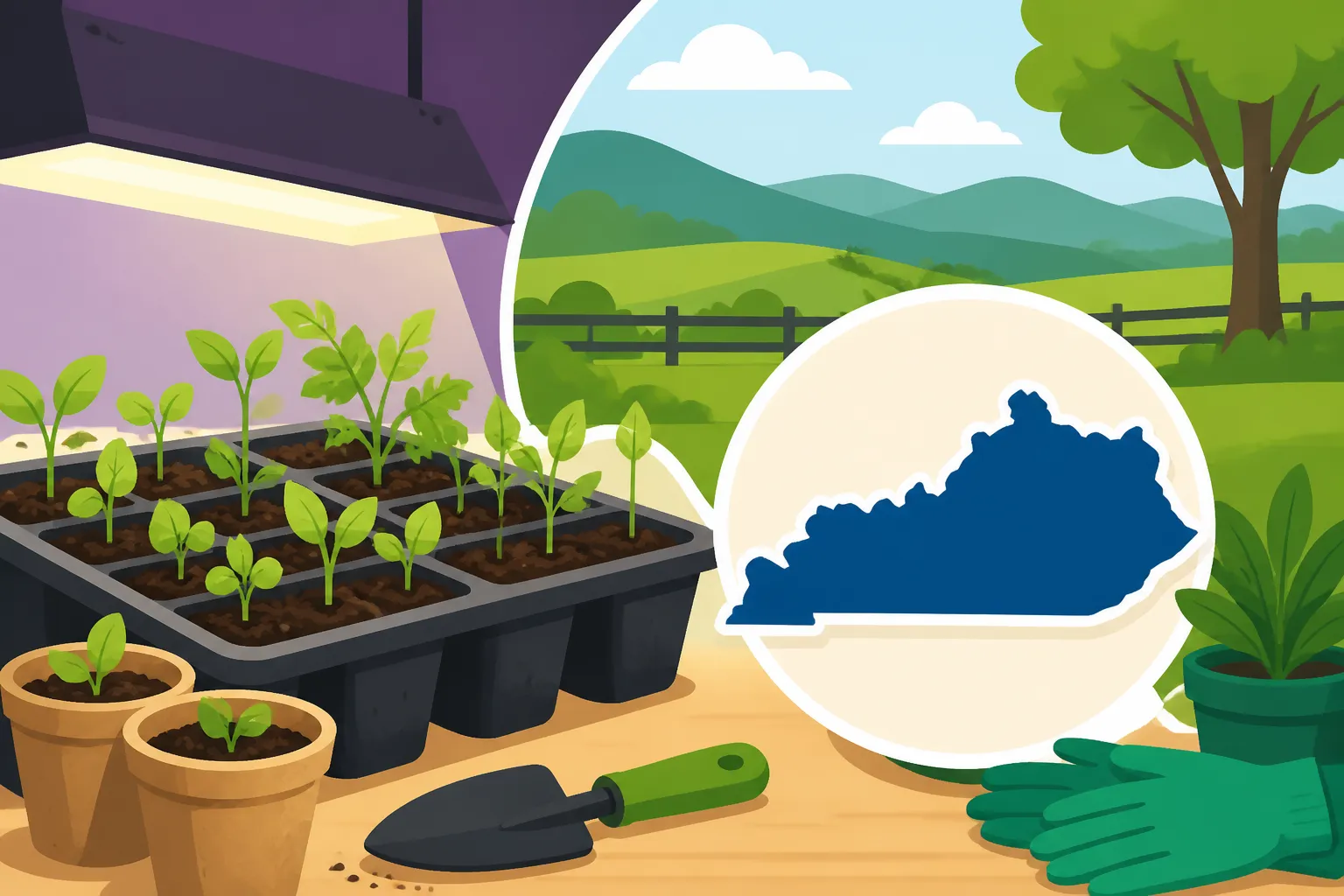
A schedule works only if seedlings have a suitable place to grow. A bright window may be convenient, but natural light can vary with the room, the season, and the direction the window faces. If seedlings lean, stretch, or appear pale, they may not be receiving enough light. Adjust their position or use an appropriate supplemental light setup, following the equipment instructions.
Choose containers that drain, and use a seed-starting medium suited to the task. Garden soil can be heavy or uneven in texture for small containers, and it may hold too much moisture or compact around delicate roots. Keep containers clean and label each sowing with the crop and variety. Labels prevent a tray of similar-looking seedlings from becoming a guessing game once several crops emerge.
Moisture requires attention but does not mean keeping the growing medium saturated. Seeds need moisture to germinate, yet persistently wet conditions can interfere with healthy root development. Check containers regularly and water according to the medium’s condition rather than a rigid routine. A tray that is drying quickly may need attention sooner than one in a cool, humid room.
Good airflow helps the growing area feel less stagnant and can help foliage dry after watering. Avoid crowding containers so closely that it becomes difficult to inspect individual seedlings. If one container has a problem, spacing and clear labels make it easier to address without disturbing every plant nearby.
As seedlings grow, watch for signs that they need more room. Roots emerging from drainage holes, crowded leaves, or rapid drying can suggest that a plant is outgrowing its container. Potting up may help, but it also adds work and can disturb roots. Starting at a manageable time and using containers suited to the plant can reduce the need for repeated handling.
Keep a simple record of what you sowed and what happened. Note the crop, variety, sowing conditions, germination success, and whether the seedlings were ready when the garden was. You do not need a complicated spreadsheet. A notebook or a set of labeled notes can reveal useful patterns: perhaps a room is too warm for a particular crop, or a certain tray dries faster than expected. Those observations can make the next planting schedule more accurate for your own setup.
Avoid sowing every crop on the same day merely because you have prepared your equipment. Different crops have different preferences and develop at different speeds. Use the packet directions and your available space to sequence work. If your indoor area is limited, prioritize crops that benefit most from being started inside, and direct-sow suitable crops outdoors when their beds are ready.
Harden off seedlings and choose the right time to transplant
Seedlings raised indoors have not experienced the changing light, wind, and temperature of an outdoor garden. Moving them straight from a protected room into full outdoor conditions can stress them. Hardening off is the gradual transition that helps plants adjust before transplanting. It is a planning step, not an optional detail to squeeze in after the bed is ready.
Begin with a sheltered outdoor location and mild conditions. Let seedlings experience outdoor light and air for a limited period, then bring them back inside or into protection as appropriate. Increase exposure gradually, paying attention to how the plants respond. If leaves wilt, scorch, or look damaged, ease back rather than pushing ahead on the original schedule.
The process should account for the forecast. Strong wind, harsh sun, cold conditions, or an abrupt weather change can set seedlings back. Choose calmer, moderate conditions when possible, and keep an eye on plants throughout the transition. Do not assume that a seedling is ready just because it has spent some time outdoors; its response matters.
Before transplanting, prepare the destination bed and water the seedlings as needed. Handle plants carefully, especially around the stems and roots. Set each plant according to the seed packet or crop-specific guidance, then water it in and monitor it as it establishes. The goal is to limit unnecessary stress and provide conditions that support new growth.
If the seedlings are not ready or the weather is poor, delay planting when you can. Avoid keeping plants too long in cramped containers, but do not treat a calendar as a reason to plant into unsuitable conditions. If delay is unavoidable, review light, spacing, and moisture so seedlings remain as healthy as possible while they wait.
Not every plant has the same tolerance for outdoor conditions. Cool-season transplants and tender warm-season crops need different decisions. A crop that can handle cooler weather may be ready to move before a crop that is sensitive to chilly nights. This is another reason to keep crop labels and planting notes together rather than treating all trays as one group.
For a fuller walkthrough of preparing seedlings for outdoor life, see Hardening Off and Planting Spring Transplants in Kentucky. If you need a reminder about regional frost risk, How Kentucky Gardeners Read Spring and Autumn Freeze Chances can help explain why forecasts and local conditions belong in the plan.
Troubleshoot delays, weak seedlings, and an overfull tray
Even a thoughtful schedule can go off course. Germination may be uneven, seedlings may grow slowly, or outdoor conditions may remain unsuitable longer than expected. The best response is to identify the problem rather than compensate by rushing a plant into the garden or giving every seedling more water.
Seeds have not germinated
Check the packet instructions and review the conditions where the containers are kept. Temperature, moisture, sowing depth, and seed condition can all affect germination. If the medium dried out, the seeds may not have received consistent moisture. If it stayed waterlogged, the seeds may have been stressed. Do not repeatedly disturb the container to inspect seeds; that can make the situation worse.
If a crop is slow, allow time according to the packet guidance and the conditions in your setup. When you decide to resow, label the new sowing clearly so you can compare it with the earlier attempt. Consider whether direct sowing might be a better method for that crop or for your available indoor environment.
Seedlings are tall, weak, or leaning
Stretching often points to inadequate light, though other growing conditions can contribute. Move plants toward stronger suitable light or adjust the light setup according to its directions. Avoid placing seedlings in an extreme environment as a quick fix. Make gradual changes and watch whether new growth becomes sturdier.
Crowding can also make seedlings difficult to manage. Thin or separate plants when appropriate, following crop guidance and handling them carefully. If seedlings have already become weak, improving light and spacing may help new growth, but a damaged stem may not recover fully. Make a realistic decision about which plants are worth keeping.
The garden is not ready when seedlings are
Check whether the bed is workable, whether the outdoor conditions suit the crop, and whether the seedlings have completed hardening off. If one of these pieces is missing, find a way to hold the plants safely while you prepare. Review container space, light, and moisture, and remove any weak or excess seedlings if keeping every plant is no longer practical.
When the bed is too wet to work, avoid digging or planting into soil that smears and compacts. Use the delay to prepare labels, supports, and other supplies instead. If a cold snap is forecast, hold tender transplants until conditions improve or prepare appropriate protection.
Too many seedlings emerged
Thinning can feel wasteful, but overcrowded seedlings often compete for light and space. Keep the strongest plants you can use and remove extras when needed. If you plan to share surplus seedlings, do so while they are still manageable and explain what crop and variety they are.
For future sowings, start an amount that matches your garden space and likely use. Keep seed packets and notes together so you can see which crops produced more seedlings than you needed. A smaller sowing can reduce the work of thinning, potting up, and finding homes for extras.
A transplant looks stressed after planting
Some adjustment after transplanting is possible, but persistent wilting, damaged leaves, or stalled growth deserves attention. Check soil moisture around the plant rather than watering automatically. Make sure the transplant was not exposed to harsh conditions before hardening off, and consider whether the weather changed suddenly after planting.
Avoid adding fertilizer or applying a spray as a reflex. First look at the plant, the soil, and recent conditions. If symptoms continue or spread, use crop-specific diagnostic guidance rather than guessing. Diagnosing Plant Health Issues in Kentucky Gardens offers a broader starting point for sorting out garden problems.
Frequently Asked Questions
Should every vegetable be started indoors?
No. Some crops are easier to sow directly in their final bed, while others benefit from being raised as transplants. Check the seed packet, consider how the crop handles root disturbance, and choose the method that fits your garden and indoor setup.
Can I use one indoor sowing date for all of Kentucky?
A single date is not a reliable fit for every Kentucky garden or crop. Local weather, site exposure, soil readiness, and the plant’s needs all matter. Use regional guidance as a reference, then adjust to conditions where you garden.
What should I do if seedlings are ready before the garden is?
Keep them in suitable light and give them enough space and moisture while you wait. Harden them off only when conditions allow, and avoid transplanting tender crops into unsuitable weather simply to stay on schedule.
Are cool-season crops and warm-season crops started under the same conditions?
Not necessarily. Their germination preferences differ, and their outdoor planting needs differ as well. Use the seed packet and crop-specific guidance to manage each group rather than placing every tray in the same conditions.
Is buying transplants a reasonable alternative to starting seeds?
Yes. Buying transplants can save space and work, particularly if you only want a few plants or lack suitable indoor light. Check that the plants look healthy and acclimate them to outdoor conditions before planting.
Sources
- University of Kentucky Cooperative Extension Service — KY_Master_Gardener_Programc.pdf?utm_source=openai (checked November 15, 2026)
Disclaimer
This article is for general informational purposes only and does not constitute professional advice. Laws, prices and regulations vary by location and change over time. Consult a qualified professional for guidance on your specific situation. Kentucky Gardening Guide is not a government agency and is not affiliated with any university extension, state department of agriculture or other government agency.